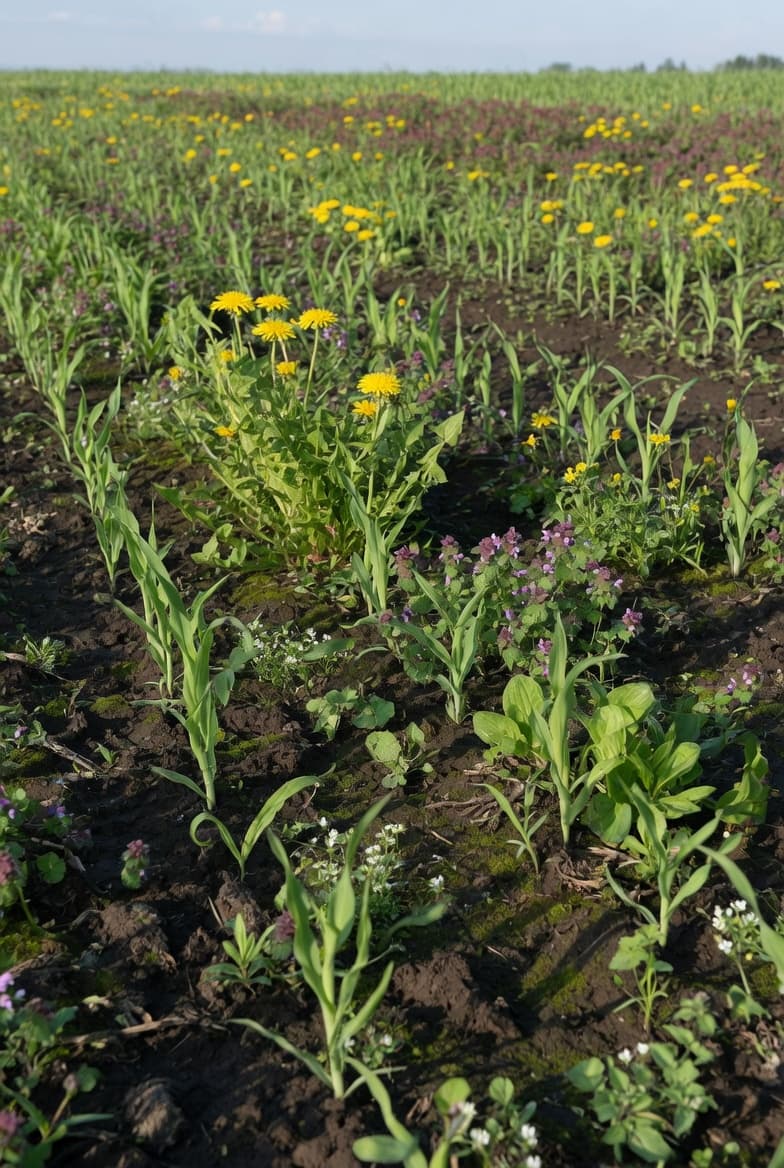
Mid-April and the spring weeds are emerging. You're looking at your fields — some still wet from recent rains, others just breaking dormancy — and you've got a window to spray that's closing fast. Your ground rig can't get in without tearing up the soil. Sound familiar?
This is the exact moment more Nebraska farmers are reaching for drone herbicide spraying instead of traditional ground-based equipment. And the numbers back it up.
Wet Fields Are No Longer Your Spray's Enemy
Here's the reality: spring soil conditions and drones are a perfect match. While your 90-foot ground boom sits idle waiting for fields to dry enough that you won't leave ruts two feet deep, a drone is already spraying.
This isn't just about timing convenience. When you eliminate ground rig traffic, you're saving your soil. No wheel compaction. No extra passes needed. No setup and cleanup delays on odd-shaped fields or smaller parcels that would barely justify firing up a full-size sprayer.
Compared to ground-based sprayers, drones have a real advantage in fields with wet spots, too-tight planting windows, or irregular shapes. You get the herbicide applied when conditions demand it — not when your equipment can physically access the field.
The Math on Input Savings Is Compelling
Here's where drone herbicide application gets interesting from a business perspective. According to research from the American Spray Drone Association, in 2024 alone, more than 10.3 million acres were treated with spray drones across the U.S., generating $215 million in revenue for rural service providers. But more important to your bottom line: product savings were near 50%, resulting in an economic savings of $13.42 per acre from reduced chemical use.
That's real money. On a 500-acre operation, you're looking at $6,710 in input savings from a single spray pass — with zero yield loss. The research shows no significant difference in grain yields compared to broadcast ground applications, but with half the chemical cost.
The precision is the difference. A drone doesn't blanket your field with herbicide. It puts product exactly where it's needed: on actively growing weeds. Broadcast spraying hits the whole field whether weeds are thick or sparse. Drones don't. That targeted approach is why product use drops so dramatically.
It's Not Just About Cost — It's About Timing
In mid-April, your window to spray spring grasses and broadleaf weeds is maybe two to three weeks. Spring conditions move fast. A 2-inch green foxtail is more responsive to herbicides than a 6-inch plant. A young henbit plant is easier to kill than a bolting one.
When wet fields prevent ground applications, you lose days or even weeks waiting for soil to firm up. A drone is up and operating in conditions that ground equipment can't touch. You spray at the right growth stage, not whenever your fields happen to be passable.
Research from Virginia Tech on drone herbicide applications confirms that spray timing is critical — and drones give you flexibility that ground rigs simply don't have.
The Regulatory Side Is Getting Clearer
If you're new to drone herbicide application, the regulatory side might feel murky. Here's the straightforward part: your applicator needs an FAA Part 107 certification (the standard commercial drone license). Beyond that, it depends on your state's herbicide label requirements.
Always check the product label to confirm it's approved for aerial application. Some herbicides are labeled for drones; others aren't. If you're working with a drone service provider like us at Nelson Drone Solutions, we handle those label checks and regulatory compliance. It's part of the job.
Why This Matters for Your Operation Right Now
If you're a Nebraska farmer trying to manage spring weeds in April, you've got three choices: wait for your ground rig to get in, scramble to hire a helicopter (expensive and limited availability), or call a drone service.
We're seeing more farmers pick option three every year.
Drone herbicide application has moved from a niche tool to a mainstream solution for spring weed control. With over 10 million acres treated annually and adoption accelerating across the Midwest, the technology is proven and available now.
One More Thing: Odd-Shaped Fields Become Assets, Not Headaches
One detail worth mentioning: drones actually prefer the fields that ground sprayers hate. A 35-acre parcel cut up by fence lines, tree rows, or inconsistent boundaries? That's where drone precision shines. Your applicator can program flight paths that cover only the area you want sprayed — no overlapping passes, no waste. Try doing that with a ground rig.
If you're managing multiple small parcels or heritage fields with weird shapes, drone herbicide application often ends up cheaper than running a ground rig setup and breakdown three times over.
The Bottom Line
Spring weeds don't care if your fields are wet. But with drone herbicide spraying, you don't have to care either. You get precision application, cost savings, soil preservation, and the timing flexibility to spray when conditions demand it — not when your equipment cooperates.
Questions about how drone spraying could work on your operation? Give us a call at (402) 326-5811 or visit Nelson Drone Solutions. We've treated over 11,000 acres with our Talos T60x sprayer drone, and we know Nebraska farming. Let's talk about what's possible for your fields this spring.